Mashable Connections: How to Play and Solve the Daily Puzzle
Mashable Connections has become a popular daily word puzzle experience for people who enjoy testing their vocabulary, pattern recognition, and problem-solving skills. Inspired by the growing popularity of category-based word games, Mashable Connections challenges players to find relationships between words and organize them into meaningful groups.
For many United States puzzle fans, mashable connections represents more than just a quick daily activity. It offers a mental workout that encourages careful thinking, creative associations, and attention to subtle differences between words. Whether you are a beginner discovering the game for the first time or an experienced player looking for better solving techniques, understanding how the puzzle works can make the experience more enjoyable.
This guide explains what Mashable Connections is, how the game works, useful strategies for solving puzzles, common mistakes players make, and tips to improve your daily results.
What Is Mashable Connections?
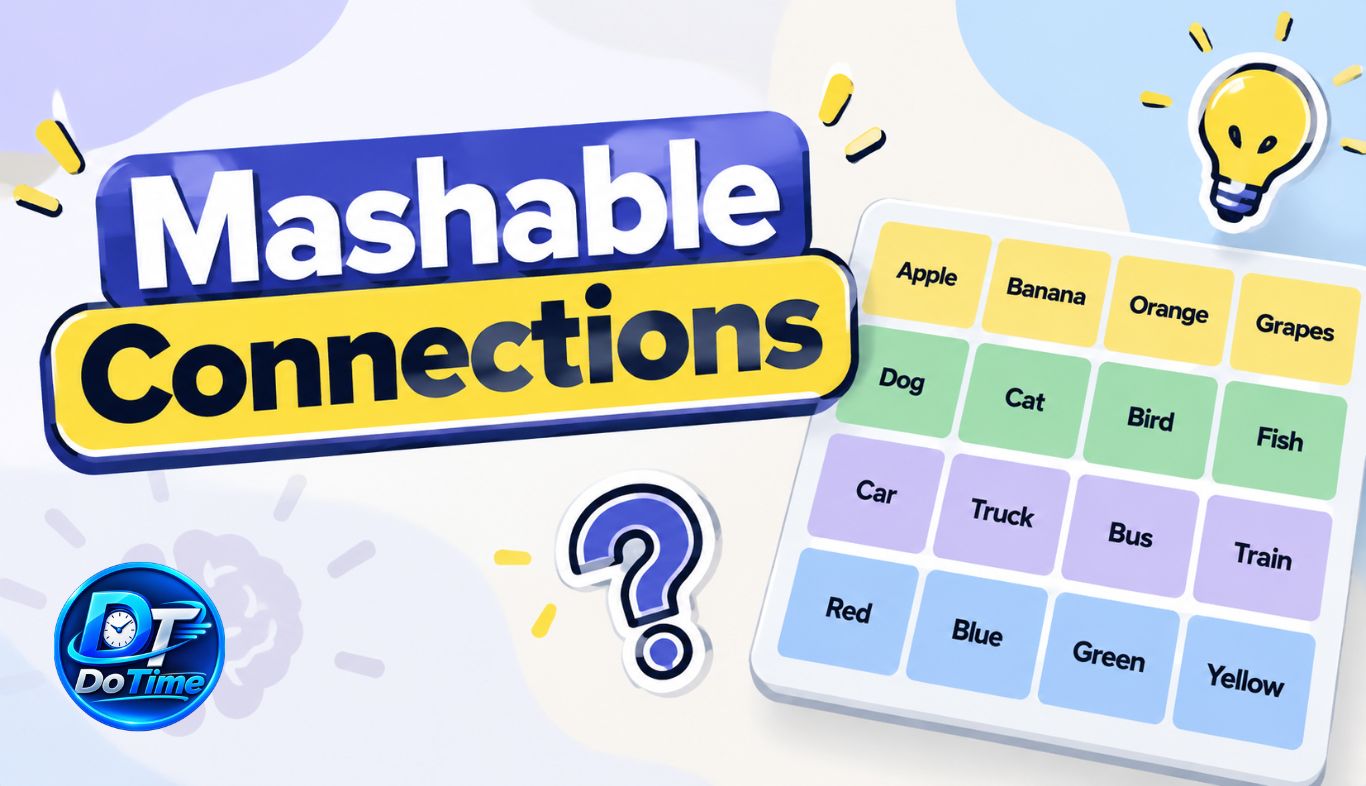
Mashable Connections is a word association puzzle where players must identify groups of related words from a larger collection of choices. Instead of simply finding definitions or matching synonyms, the challenge is recognizing hidden relationships between words.
The puzzle format typically presents a set of words that appear unrelated at first. The player’s goal is to divide those words into smaller groups based on a shared connection.
Connections can be based on many different ideas, including:
- Words that belong to the same category
- Common phrases
- Cultural references
- Names, places, or brands
- Similar meanings
- Wordplay or language patterns
The difficulty comes from the fact that many words may seem like they belong together. A successful solution requires finding the strongest connection rather than the first possible match.
How Does Mashable Connections Work?
The basic concept behind Mashable Connections is simple: identify several groups of related words from a mixed list.
Players usually begin with a collection of words displayed together. They must select a group of words that share a specific relationship. Once the correct group is identified, it is removed, leaving fewer words and making the remaining puzzle easier.
A typical solving process involves:
- Reading all available words carefully
- Looking for obvious relationships
- Testing possible groups
- Removing confirmed categories
- Using remaining words to discover harder connections
The game rewards patience because some connections are intentionally designed to be less obvious.
Why Are Connection-Style Word Puzzles Popular?
Word association games have gained popularity because they combine entertainment with mental exercise. Unlike games that depend mostly on speed, connection puzzles focus on reasoning and observation.
Many players enjoy them because they help develop skills such as:
- Vocabulary improvement
- Pattern recognition
- Logical thinking
- Memory recall
- Flexible problem-solving
For adults, daily puzzles can become a relaxing routine. They provide a short break from work or digital distractions while still keeping the brain engaged.
Strategies to Solve Mashable Connections More Effectively
Solving connection puzzles becomes easier when you use a structured approach. Random guessing often creates confusion, especially when several words appear related.
Start With the Most Obvious Group
The easiest category is usually the best place to begin. Look for words that clearly share a relationship.
Examples of obvious connections might include:
- Types of animals
- Colors
- Foods
- Sports terms
- Common objects
Finding one confirmed group reduces the number of remaining possibilities.
Look for Multiple Meanings
One of the biggest challenges in connection puzzles is that words often have more than one meaning.
A word may belong to different categories depending on how it is interpreted.
For example, a word could represent:
- A physical object
- A person’s name
- Part of an expression
- A technical term
Before selecting a group, ask yourself whether the connection is strong enough compared with other possibilities.
Avoid Choosing a Group Too Quickly
A common mistake is selecting four words that appear connected without checking the entire puzzle.
Sometimes puzzle creators include misleading combinations. Several words may share a general theme, but only one category is the intended answer.
Before submitting a group, consider:
- Do all four words fit equally well?
- Is there a more specific connection?
- Could one word belong to another stronger category?
Remove Confirmed Answers and Reevaluate
Once you solve one category, the remaining words become easier to analyze.
The puzzle changes because fewer options remain. A connection that was unclear before may become obvious after another group is removed.
Common Mistakes Players Make
Even experienced puzzle players can struggle because connection games are designed to test careful reasoning.
Assuming Similar Meanings Are Always Correct
Words with similar meanings do not always belong together. A puzzle may include words that are related but not part of the same intended category.
Ignoring Unusual Connections
Some groups are based on ideas outside everyday vocabulary. Players who only search for simple categories may miss connections involving:
- Entertainment
- History
- Pop culture
- Language expressions
- Professional terms
Overthinking Simple Answers
Sometimes players search for complicated explanations when the correct answer is straightforward.
A good strategy is to balance creativity with simplicity. Start with common relationships before exploring more advanced possibilities.
Tips to Improve Your Puzzle Skills
If you want to become better at Mashable Connections, regular practice can help improve your recognition skills.
Expand Your Vocabulary
Reading widely exposes you to more words, phrases, and references. Books, news articles, magazines, and quality websites can all improve language familiarity.
Practice Different Types of Word Games
Other puzzles can strengthen similar skills, including:
- Crossword puzzles
- Word searches
- Trivia games
- Logic puzzles
- Vocabulary challenges
Each type develops different aspects of reasoning.
Review Mistakes
When you miss a puzzle, take time to understand why the correct answer worked.
Learning from mistakes helps you recognize similar patterns in future games.
How Mashable Connections Compares With Other Daily Word Games
Daily word puzzles often focus on different abilities.
Some games test vocabulary directly, while others focus on guessing, spelling, or deduction. Connection-style puzzles are unique because they require players to understand relationships between multiple ideas.
Compared with traditional crossword puzzles, connection games usually involve fewer clues but require broader thinking. Instead of finding one answer at a time, players must identify a complete pattern.
This makes them appealing to people who enjoy:
- Creative thinking
- Category discovery
- Mental challenges
- Short daily activities
Benefits of Playing Word Connection Games
Although these puzzles are mainly designed for entertainment, they can encourage several useful mental skills.
Improves Pattern Recognition
Finding connections between unrelated words trains the brain to notice relationships and organize information.
Encourages Creative Thinking
Many puzzles require looking at words from different perspectives rather than accepting the first meaning that comes to mind.
Provides a Healthy Mental Break
A short puzzle session can be a relaxing alternative to passive screen time.
How to Build a Daily Puzzle Routine
Many players enjoy making word puzzles part of their daily habits.
A simple routine can include:
- Solving the puzzle at the same time each day
- Taking time to think before guessing
- Recording difficult categories
- Learning new words from missed answers
The goal is not only completing the puzzle but improving your problem-solving process over time.
Frequently Asked Questions About Mashable Connections
What is Mashable Connections?
Mashable Connections is a category-based word puzzle where players organize words into groups based on shared relationships. The challenge is identifying the correct connections among several possible options.
Is Mashable Connections free to play?
Availability and access options can depend on the platform offering the puzzle. Players should check the official Mashable website or the specific puzzle page for current access details.
How many groups do you need to find in Mashable Connections?
The exact format may vary, but connection-style puzzles generally require players to identify multiple groups of related words from a larger collection.
What is the best strategy for solving Mashable Connections?
The best approach is to start with obvious categories, avoid rushing, consider multiple meanings, and carefully compare possible connections before submitting an answer.
Can playing word puzzles improve vocabulary?
Regular word puzzle practice can help players become more familiar with words, meanings, and language patterns. However, improvement depends on consistent practice and learning from new challenges.
Conclusion
Mashable Connections offers a fun way to challenge your vocabulary, reasoning skills, and ability to recognize patterns. The puzzle may look simple at first, but its clever word relationships make each challenge an opportunity to think creatively.
By learning how categories work, avoiding common mistakes, and practicing different solving techniques, players can improve their experience and approach each puzzle with more confidence. Whether you play for relaxation or enjoy competing with your daily results, mashable connections provides an engaging mental challenge for puzzle lovers across the United States.